





Was this newsletter forwarded to you? Sign up to get it in your inbox.
I’d like to introduce a concept I call “selfish software.”
Selfish software refers to writing code for yourself without any external customers in mind. This practice might sound niche or individualistic, but there’s no need for it to be.
Think about building software today. Workflows are contorted to match rigid systems. Pre-built solutions are preferred over new ones, and compromises in functionality are common. There’s a way that things “should” work, and it’s easier to follow these rules than to break them.
But this approach is backwards. Software should conform, not the other way around.
Conforming has rarely led to great outcomes. Some of the most significant breakthroughs have come from flexibility, addressing personal pain points, and having fun. Linus Torvalds, the founder of two cornerstones of modern computing—operating system Linux and version control system Git, both open-sourced—started the former at age 21 in college as a way to procrastinate from school work. It was “just a hobby, [it] won’t be big and professional,” he said. It’s a lesson for all of us: If you conform too much, you can lose your creativity and come up with boring solutions.
I learned this lesson the hard way. After I sold my first company four years ago, I found myself in an odd position. Having grown Rock Content to become the content marketing leader in Latin America, I had achieved financial freedom to do what I wanted for the rest of my life—yet I'd lost my drive to create.
I grew up in a poor family, and felt lucky when I fell in love with engineering and learned that there was a way to do what I loved while making money. The first time I programmed my own game as a kid, I felt like a wizard. Code was like magic, but better—it was real. Coding became the most powerful organizing principle of my life. I was obsessed with it.
But once I sold Rock Content, I found that it had stripped away the very thing that had made me successful—the joy of building. I started to focus too much on the market. Whenever I had a new idea, I’d think about potential customers instead of building the things I wanted to. This dry, paint-by-the-numbers approach eroded all the joy I’d once had of building software.
So I started writing code just for myself. I became a builder of selfish software. I had a long list of exciting ideas that I’d been putting off for more profitable ones. When I joined Every as an entrepreneur in residence, I challenged myself to complete nine experiments in three months. I completed eight projects—I had a baby during this period, which slowed me down—and felt the joy return. Three of those projects are a simulation for AI characters, a new type of personal knowledge management system, and a system to automatically keep content up to date. I was back in building mode. And because building is a part of my identity, I felt like I was becoming myself again.
When you create selfish software, there’s nowhere to hide. You can’t gloss over a clunky interface or excuse an awkward feature. The feedback loop is immediate and brutally honest, because your audience is just yourself. You’re forced to refine every detail until it works. Once you have something that genuinely solves your own problems, you may be surprised by how many others it helps—even if you haven’t developed a grand plan for profit. But the profit isn’t the point. The point is the fun, creativity, and excitement you’ve had along the way. And it’s easier than ever with AI.
Sponsored by: Every
Tools for a new generation of builders
When you write a lot about AI like we do, it’s hard not to see opportunities. We build tools for our team to become faster and better. When they work well, we bring them to our readers, too. We have a hunch: If you like reading Every, you’ll like what we’ve made.
How to get started building selfish software
It can be challenging to jump into selfish software after being accustomed to searching for customers and making projects for profit. I had to rewrite my own workflows and to rethink how I approached work. Here are a few steps I took to get started:
Tune out external noise
I had to train myself to stop thinking about other people’s needs while building, and to stop asking the question: “Who else would use this?” I like to turn off notifications, close unrelated tabs, and set aside what I like to call “playtime” to give my creative instincts the space they need to surface without the interference of market-driven thinking.
Identify personal pain points
Reflect on your daily annoyances. Notice those moments when you think to yourself, “I wish I had a tool for this.” Keep a journal or notes app handy to log every micro-frustration. Start with tasks or processes you repeat often. If you build a tool to handle something you face regularly, you’ll experience immediate relief every time you use it.
Start with small pieces of “disposable software"
Modern AI tools and code generators make it easy to spin up short-lived solutions without the lengthy effort of creating a fully polished product. Whether you need a quick script to parse data or transform a file format, building these little helpers flexes your problem-solving skills and helps you fail quickly and cheaply. You’ll learn what works and what doesn’t in a fraction of the time it would take with a traditional development cycle.
Develop personal software for ongoing use
Once you’re comfortable with disposable projects, move into more personal software—custom software for your personal needs. Your ongoing use will be a good guide to improving it.
Keep iterating in real time—tweak features, polish interfaces, and add anything that brings you delight, even if it seems too quirky or “unprofessional.” It can help to document your logic along the way. Even simple notes will keep you from forgetting important details after a few weeks of not touching the code.
Maintain a playful mindset
Try ideas that might seem out of place at a larger company and remind yourself that there’s no boss or investor breathing down your neck. With that pressure gone, you can follow your curiosity wherever it leads. Ask yourself: “What would make this even cooler for me?” Then do it. This sense of exploration is exactly what often leads to innovative ideas. For instance, I'm currently working on a new project that originated from a failed one. I had created a system to generate motivational ads targeted at myself, but I didn't like the output of any LLM models. I’ve needed to go deep on preference optimization so that the model outputs would improve, and, in the process, I’ve developed an idea for a new preference optimization fine-tuning scheme.
Scale or don’t scale—it’s your choice
Selfish software doesn’t need to remain personal—if you’d like it to scale, you can. People with the same challenges might be eager to adopt your solution. You can refine the interface or add better documentation if you decide to open it up to a wider audience, but that’s optional. Sometimes your selfish software remains just for you, and sometimes it becomes the seed of something larger. Both outcomes are entirely valid and part of the beauty of this approach.
Tools for selfish software
Here are the AI tools in my personal tech stack that have made it easy to build selfish software:
- Code editor: I mostly use Cursor, but am currently evaluating a migration to Windsurf. Windsurf’s Cascade chatbot has been great to collaborate with and help me understand my codebase better.
- Terminal operations: I’ve transitioned from Warp to Ghostty.
- AI pair programming assistance: I employ Aider, which integrates with local Git repositories and supports popular large language models. This helps me add features, fix bugs, and refactor code directly from the terminal.
- Project management: I use Linear, because it integrates well with other software.
- Development: I advocate for Next.js, a React-based framework that makes it easy to build production-ready web applications, accompanied by Vercel for effortless deployment.
- Data management: My data management relies on PostgreSQL and is hosted through NeonDB. It offers a robust and scalable database solution.
- Note-taking: To organize my thoughts and tasks, I use Obsidian, creating one note per issue to maintain a structured and navigable record of my work.
Get back to what you love
Selfish software is not about ignoring user needs altogether; it’s about restoring the joy of building by making yourself the user you’re most eager to please. This approach leads to software that’s a perfect fit for your own workflow, often resulting in insights and breakthroughs that generic, one-size-fits-all solutions miss.
Take Stardew Valley, one of the most successful indie games of all time. Eric Barone spent four years creating the game by himself, learning to code, make pixel art, and compose music along the way. He wasn't trying to follow market trends or create the next big hit; he simply wanted to make the farming game he personally wanted to play, one that would improve upon the mechanics of Harvest Moon, his favorite childhood game. The result? A game that has sold over 41 million copies, generated more than $500 million in revenue, and brought joy to players worldwide. Stories like these teach us a valuable lesson: If you conform too much, you risk losing your creativity and coming up with boring solutions.
Building for yourself has never been more accessible—or more fun. Give it a shot. Whether your project remains a personal hobby or blossoms into the next big thing, you’ll have created something truly valuable: software that actually serves the unique needs of its user—you.
Edmar Ferriera is an entrepreneur-in-residence at Every. Previously he founded and sold Rock Content, a leading content marketing platform.
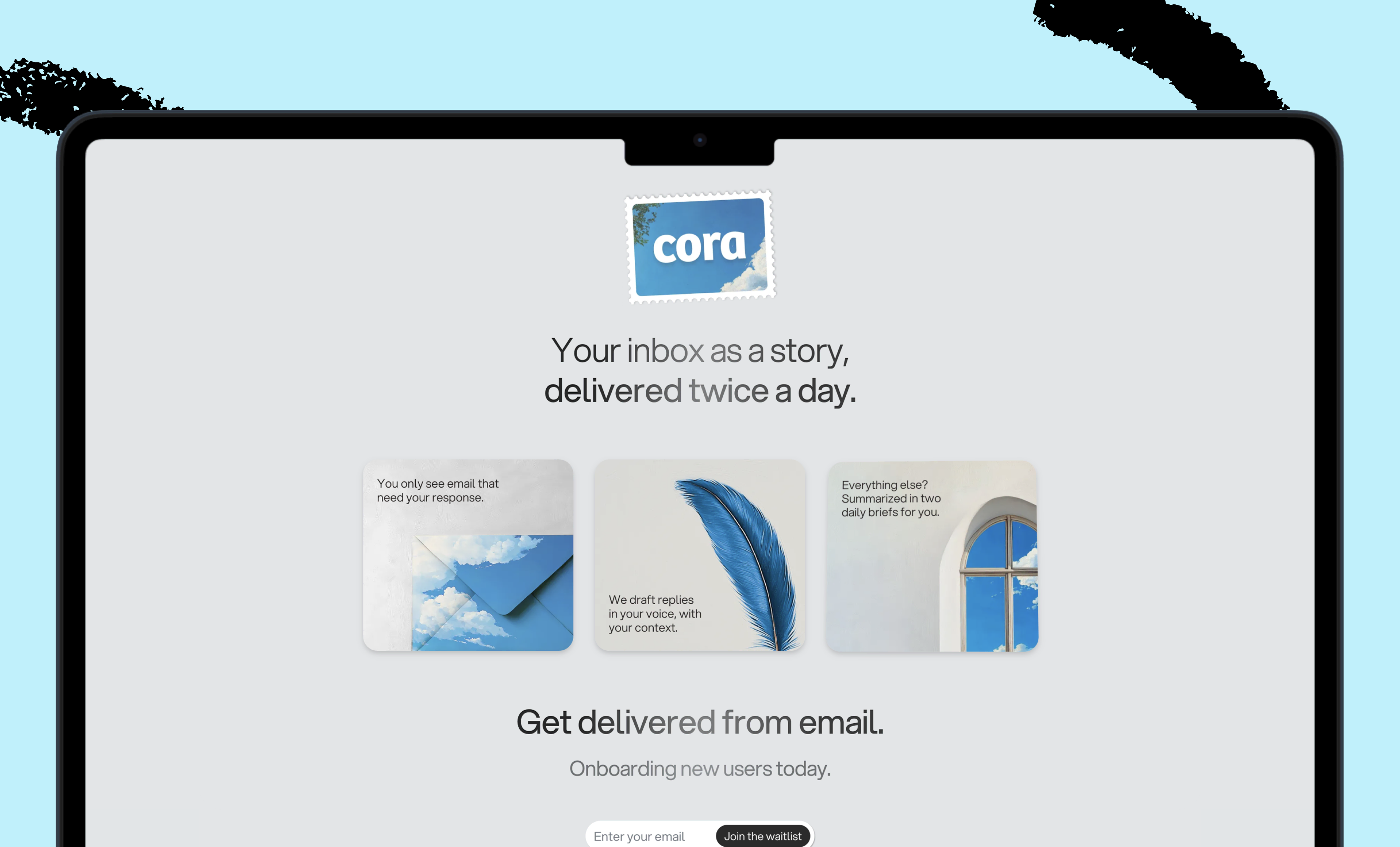
We also build AI tools for readers like you. Automate repeat writing with Spiral. Organize files automatically with Sparkle. Write something great with Lex. Deliver yourself from email with Cora.
Get paid for sharing Every with your friends. Join our referral program.
The Only Subscription
You Need to
Stay at the
Edge of AI
The essential toolkit for those shaping the future

"This might be the best value you
can get from an AI subscription."
- Jay S.
 Every Content
 AI&I Podcast
 Monologue
 Cora
Cora
 Sparkle
 Spiral
Join 100,000+ leaders, builders, and innovators

Email address

Already have an account? Sign in
What is included in a subscription?
Daily insights from AI pioneers + early access to powerful AI tools





 Front-row access to the future of AI
 In-depth reviews of new models on release day
Playbooks and guides for putting AI to work
Prompts and use cases for builders
In-depth reviews of new models on release day
Playbooks and guides for putting AI to work
Prompts and use cases for builders
In-depth reviews of new models on release day
Playbooks and guides for putting AI to work
Prompts and use cases for builders
In-depth reviews of new models on release day
Playbooks and guides for putting AI to work
Prompts and use cases for builders
 Bundle of AI software




.png)
 Kieran Klaassen

 Katie Parrott
.28.41_AM.png)
 Reviews of new AI models on release day
Comments
Don't have an account? Sign up!
Similar vibe to the start of Robin Sloan's 2020 piece: https://www.robinsloan.com/notes/home-cooked-app/
Man this is really the zeitgeist at the moment. It's what I want to do with my time, but I haven't really let myself take that leap. Maybe now is the time for me to take the first step with my full force of conviction. Great article.
My favourite words:
"Play"
"conform too much, ... risk losing your creativity and coming up with boring solutions."
"Building for yourself has never been more accessible—or more fun."
I think within those lies the driving force behind it, finding joy again and inviting play which is often paired with curiosity and the least spoken about but most important aspect of great work. As evidenced by your own story. Makes me think calling this 'selfish software' is either provocative or misleading because it has a more negative connotation than the actual driving forces and the sentiment. But maybe that's just me.
Thanks for sharing the journey